DVD-quality lessons (including tabs/sheet music) available for immediate viewing on any device.
Take your playing to the next level with the help of a local or online mandolin teacher.
Monthly newsletter includes free lessons, favorite member content, mandolin news and more.
Premier Sponsors


|
Please note this is an archived topic, so it is locked and unable to be replied to. You may, however, start a new topic and refer to this topic with a link: http://www.mandohangout.com/archive/53038
Yooper - Posted - 03/07/2020: 06:31:43
Hi Folks,
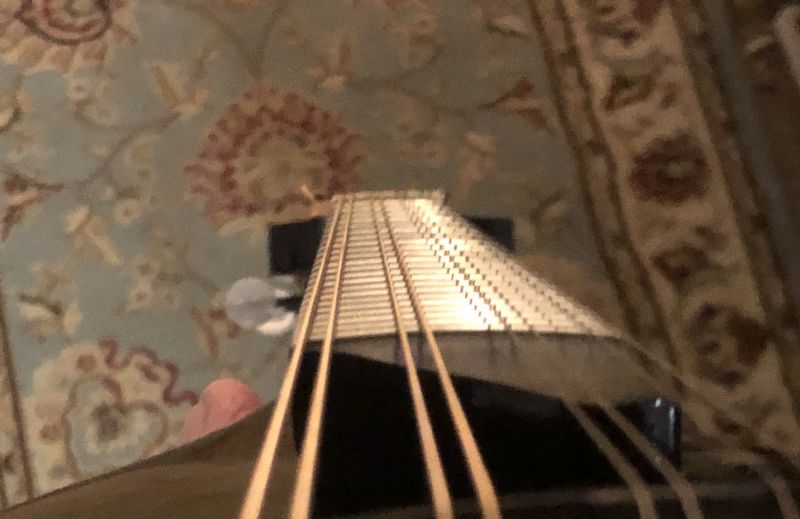
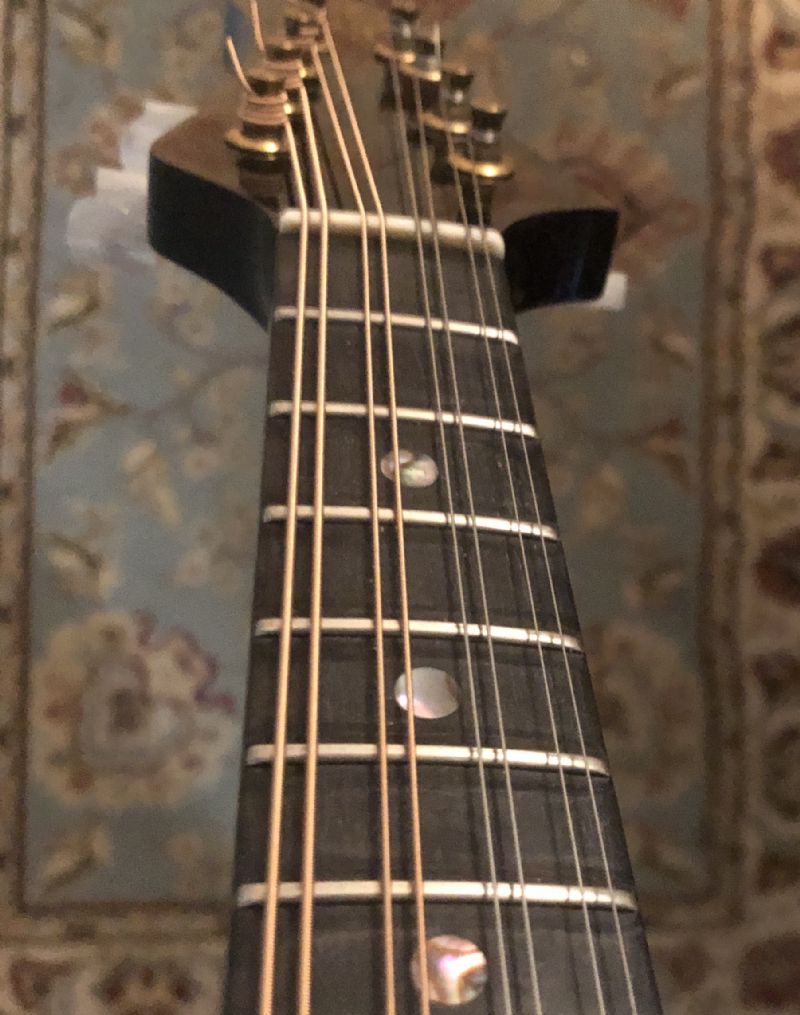
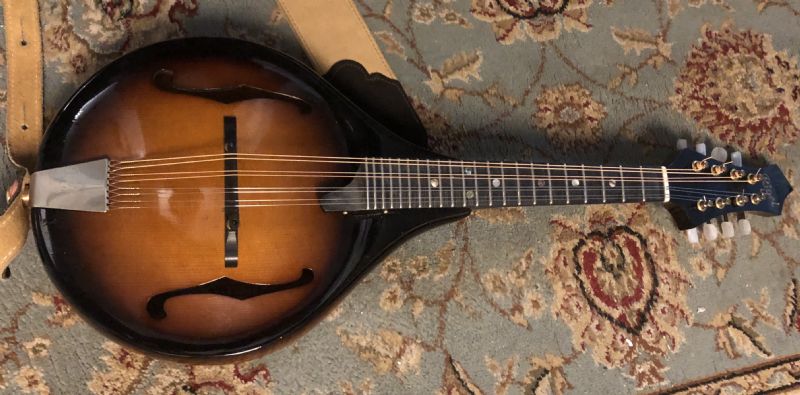
I recently realized that I strongly prefer flat fretboards to radiused. I've played for 30+ years and have owned a bunch of mandolins, but I guess they virtually all had flat fretboards. A while back, I got a Rigel G-110 that I really like. But it has a radiused fretboard, and it is just not comfortable for me. I was thinking of selling or trading it, but a friend (Jim Garber) suggested that I contact the builder (Peter Langdell) to see if he could put a flat fretboard on it. I've done that. Will report back on how that progresses.
Does flat vs radiused fretboard matter that much to others?
Brent
Edited by - Yooper on 03/08/2020 06:33:17
MandoTom2 - Posted - 03/07/2020: 12:16:05
This subject comes up for both mandolins and banjos...
Everyone on both sides of the coin (flat vs rad.) have valid reasons for their preference of one over the other...
I've been using flat fretboards since 1983 when I started playing and have never actually played a mandolin with a radiused fretboard.
So, I my not be the guy to ask, but it it seems like a simple preference... whatever you like and get used to...
It seems like the history of fretted stringed instruments in general favors the flat boards... over the course of hundreds of years.
Also, as a fellow who plays guitar, mandolin, banjo and fiddle, the 'purpose' of a curved fingerboard on a violin or fiddle is to accommodate the fact that you won't be playing 3 and 4 note chords (grouped intervals) on a violin or violin family instrument. Usually, you'll accommodate 'double-stops' on the first and second, second and third or third and fourth strings.
I've always felt that a curved fret board (on a mandolin or banjo) would inhibit mutli-string (multi-voice) chord playing, especially in the way I am used to doing it.
To my mind, a curved fret board (mando family) is little more than borrowing a construction/design idea from the violin family.
Kind of like 'tunneled fifth strings' on banjos...
The idea goes back more than a hundred years to jolly old England...
If it was a great idea or a necessary one, they'd all be made like that...
I suspect luthiers and designers are always looking for something new as in any other industry.
As long as there are creative, talented people in the field, they will be trying new things and borrowing pre-existing ideas from other places...
Good hearing from you...
Tom
Robert - Posted - 03/07/2020: 16:35:50
It's all a matter of what you are used to. I owned lots of flat fingerboard mandolins until I got a Weber in the early 2000's. Got used to it and now I notice a flat fingerboard but it really doesn't matter to me. If the neck feels good. I'm fine with it.
Yooper - Posted - 03/08/2020: 07:08:05
The way that a radius feels to me, is that it makes me reach just a little bit further to get the G string with my pinky when hitting a 4-string chop chord, like the G or D shape. That makes it so I have to twist my wrist forward and make my pinky come down more vertically on the fretboard or else I end up muting the G string. Maybe it's poor technique on my part or maybe some people like that extra stretch. The radius could make it feel like the fretboard is a bit wider. Anyway, I can get used to the radius for leads, but it makes chop chords especially uncomfortable.
Yooper - Posted - 03/08/2020: 14:34:34
I was watching the PBS Country Music series the other night, and they were interviewing Marty Stuart about how rough the conditions were in the Ryman Auditorium. Specifically, playing in Tennessee in the summer, in crowded auditorium, with no air conditioning. Marty said that, at one point Lester Flatt went to the manager and said that maybe he and some of the stars could pitch in to pay for air conditioning. The manager said that they had already looked into it, and that it would cost $2 million. Lester replied "gee, it's not as hot as I thought it was." That is kinda how I now feel about my radiused fretboard. Seems that it's not cheap to switch those out, which makes it feel more comfortable in my hand than it used to. ;)
MandoTom2 - Posted - 03/10/2020: 01:14:00
quote:
Originally posted by YooperThe way that a radius feels to me, is that it makes me reach just a little bit further to get the G string with my pinky when hitting a 4-string chop chord, like the G or D shape. That makes it so I have to twist my wrist forward and make my pinky come down more vertically on the fretboard or else I end up muting the G string. Maybe it's poor technique on my part or maybe some people like that extra stretch. The radius could make it feel like the fretboard is a bit wider. Anyway, I can get used to the radius for leads, but it makes chop chords especially uncomfortable.
This is the defining issue for me... Why would you want to make any instrument MORE DIFFICULT to play?
The world is ALWAYS talking about ERGONOMICS, i.e., making anything requiring repetitive movements with the hands, wrists, fingers easier, easier, easier... Especially to avoid physical injury and soft tissue damage...
In my opinion, flat fret boards are the way to go for chorded instruments...
Why reinvent the wheel...
If it works (flat), go with it!
Tom
silverface - Posted - 05/13/2021: 22:28:27
I realize this is an old thread, but I haven'y been around much due to health issues (doing OK - mostly annoying more than dangerous).
I've owned flat and radiused board mandos; guitars with various radius levels - a without exception I find radiused boards are not only far more comfortable, they are easier to play accurately/cleanly (most significantly ]when playin chords) and help increase speed.
They are not copying violin family instruments, where a radius is essential to bowing - they're more a nod to the electric guitar world, where radiused boards are found on virtually every instrument. Hollowbody azz guitars tend to have large radius fretboards (12-16...a few 20"), while solid body guitars range from Fender's original 1950's 7.25" to metal guitars (where sring bends at very high frets require a flatter board) in the 16-20" range.
Many guitars have "compound radius" boards - 7.15 or 9" at the lower frets flattening out to 15-16" above the 13th fret, where bends are more severely affected. This makes them easier/faster/more comfortable, with lower action practical at the lower chord positions and flatter, easy-bending (without buzzing) at the high end.
But they are are also far more comfortable and accurate in the wider fret spacing of the low end with a higher radius.
And although bending is not really an issue on mandolins, playing comfort and accuracy/speed are.
Manny players are used to the Orville Gibson designed zero radius flat board - but players who transitioned from guitar seem to usually prefer radiused boards. I played Gibsons/Gibson typed for years and found flat boards weird - like a tiny classical guitar(which are generally flat...or close to it.
But I played a Monteleone with a radiused board made like one he had done to help David Grisman with tendonitis - and I was cooked! I ended up with a Rigel A+ Deluxe, which I have had for over 20 years and a backup Gibson A-00 with a replaced radiused board and larger frets (another "non traditional" mandolin mod that mades them FAR easier to play than 1920's-style tiny frets).
Without exception every bluegrass player I worked with who owned mandos with flat boards (about 95% of them) preferred the radiused board...and "guitar frets" - of the Rigel over everything from Ibanez F5 knockoffs to Gibson and other traditional F5's - AFTER about 20 minutes or so of "transition" time. Most hated it initially, but once they got used to the feel wanted to know who modified it! ;-)
Honestly, when I read that a player doesn't "get" radiused boards - especially those who think they would cause physical issues - I'm baffled. If you do a little research you find they have better ergonomics and can HELP finger and wrist issues - precisely why Grisman had his Monty radiused,
I'm a multi-instrumentalist and while some may think I would want to upgrade from the A+Deluxe I have only found a few radiused-board mandos that were better - and all would have cost well into 5 figures for a very marginal improvement. And I've played it as mando player in a couple bluegrass bands where it cut like a knife; alt-folk bands playing all sorts of music, from country to swing;and in many plugged-in situation in country rock and rock bands.
Hpe that gives a little different perspective regarding radiused boards. I strongly suggest players try them long enough to really get a feel - ESPECIALLY players who have any tendonitis issues!
Yooper - Posted - 05/14/2021: 07:51:47
Good insights Jim. There are a few top players who prefer flat fretboards, but it is obviously true that a large majority of players prefer radiused. I remember a popular builder mentioning that he hasn't made an instrument with a flat fretboard in years because no one wants them. I think it may have to do with differences in hand anatomy and playing technique. Everyone is different. I gave my Rigel a couple of years. I loved the instrument, but did not like the strongly radiused fretboard for reasons described above. It went into a trade for a '67 D-18, but I still have four other mandos (all with flat fretboards) that keep me happy. I agree with your preference for larger frets. I recently had my '20 F-4 refretted and put in larger frets (not as large as Rigel's), which I really like. But it is clear that when it comes to fretboard radius, I am an outlier. At this point in my life, I have accepted my various eccentricities.
Bowfinger - Posted - 06/24/2021: 06:09:48
I have two fine mandolins one flat, one radius. I am coming to think the radius in the saddle makes me more inaccurate in picking the strings. I love the sound of that mandolin and am considering doing something about the radius of the bridge and or fretboard. The cost is a factor though. I wonder If just reducing the arch on the saddle would keep the intonation good enough?
Terms of Use | Privacy Policy | Privacy Consent (EU/GDPR Only)
Copyright 2026 Mando Hangout. All Rights Reserved.